

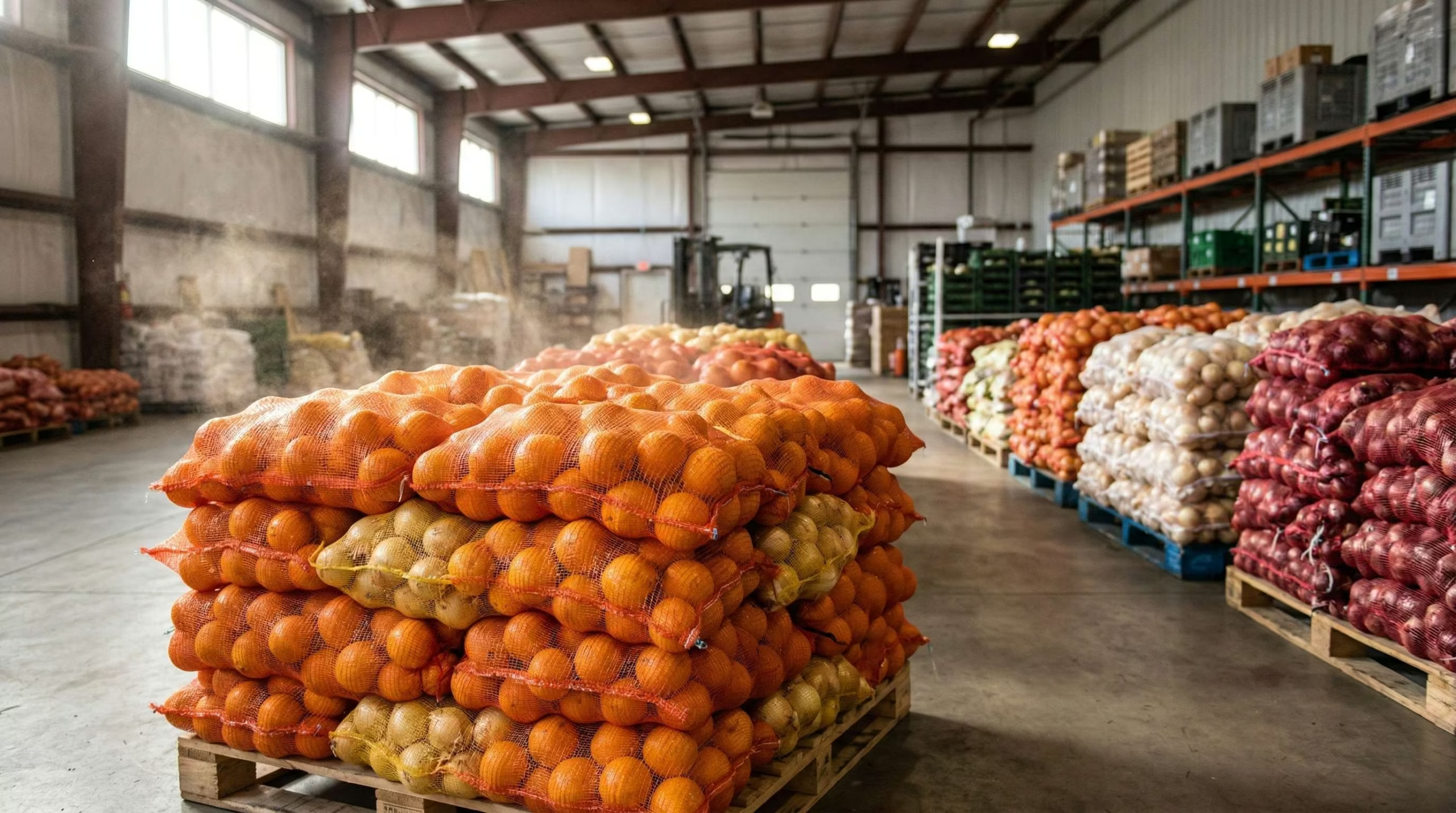
How Breathable Packaging Reduces Post-Harvest Loss in Fruits & Vegetables
Introduction
Post-harvest loss is one of the most significant challenges faced by the global agricultural industry. One promising solution is the use of Breathable Packaging for fruits and vegetables. A considerable percentage of fruits and vegetables never reach the consumer due to spoilage during storage, handling, and transportation.
Improper packaging is one of the major contributors to these losses. When fresh produce is stored in non-breathable or poorly ventilated packaging, moisture accumulation accelerates decay, leading to financial loss for farmers, wholesalers, exporters, and retailers.
Breathable packaging solutions — particularly mesh net bags — are playing a crucial role in reducing post-harvest losses. By allowing natural airflow, these packaging formats help maintain product freshness and extend shelf life.
This article explores how breathable packaging reduces spoilage and supports a more efficient agricultural supply chain.
1. Understanding Post-Harvest Loss
Post-harvest loss refers to the deterioration of agricultural produce after harvesting but before it reaches the final consumer.
Common causes include:
- Excess moisture
- Poor ventilation
- Rough handling
- Temperature fluctuations
- Microbial growth
- Compression damage
Fruits and vegetables continue to respire even after harvest. If this natural process is disrupted due to restricted airflow, internal heat and moisture build up, accelerating spoilage.
Proper packaging plays a central role in preventing these issues.
2. The Role of Airflow in Fresh Produce Preservation
Air circulation is essential for maintaining the quality of fresh produce.
When airflow is restricted:
- Moisture gets trapped
- Condensation forms inside packaging
- Bacterial and fungal growth increases
- Produce softens and deteriorates
Breathable mesh net packaging provides continuous ventilation. The open-weave structure allows air to pass freely around the produce.
This airflow helps:
- Regulate temperature
- Reduce humidity levels
- Prevent condensation
- Slow down spoilage
For products like onions, garlic, potatoes, and citrus fruits, ventilation is especially critical.
3. Moisture Control & Spoilage Prevention
Moisture is one of the primary causes of post-harvest damage.
When vegetables such as onions and garlic are stored in sealed packaging, moisture accumulation can lead to:
- Sprouting
- Mold growth
- Rotting
Mesh net bags reduce this risk by allowing excess moisture to escape. The breathable structure prevents the formation of water droplets inside the pack.
By maintaining a balanced moisture environment, breathable packaging significantly lowers spoilage rates.
4. Temperature Regulation During Transportation
During transportation, produce is exposed to fluctuating temperatures.
In non-breathable packaging, temperature variations can create internal condensation. This trapped moisture accelerates decay.
Mesh net packaging helps regulate temperature by:
- Allowing heat to dissipate
- Preventing internal heat buildup
- Supporting natural air exchange
This is particularly beneficial in long-distance shipments and export consignments.
5. Reduced Compression Damage
Another factor contributing to post-harvest loss is compression damage caused by heavy stacking.
Rigid packaging may protect shape but can trap heat. On the other hand, low-quality flexible packaging may tear under pressure.
High-quality mesh net bags strike the right balance by offering:
- Flexible yet strong structure
- Even weight distribution
- Resistance to tearing
- Lightweight handling
This reduces bruising and pressure damage during stacking and transport.
6. Enhanced Visibility Reduces Handling
Because mesh packaging is transparent, quality can be inspected without opening the pack.
This reduces:
- Excessive handling
- Repacking
- Product exposure
- Mechanical damage
Retailers and wholesalers can visually assess freshness, reducing unnecessary interference that often leads to spoilage.
7. Suitable for Multiple Produce Types
Breathable mesh packaging is versatile and suitable for various products:
Root Vegetables:
- Onions
- Potatoes
- Garlic
- Ginger
Citrus Fruits:
- Oranges
- Sweet Lime
- Lemons
These products benefit greatly from airflow and moisture control provided by mesh net packaging.
Available in 1kg to 5kg formats and bulk roll options, breathable nets adapt to both retail and wholesale requirements.
8. Economic Benefits of Reduced Post-Harvest Loss
Reducing spoilage directly impacts profitability.
Lower post-harvest loss means the following:
- Higher sellable quantity
- Reduced wastage
- Better return on investment
- Improved supply chain efficiency
For large distributors and exporters, even a small reduction in spoilage percentage can translate into significant financial savings.
Investing in breathable packaging is therefore not just a quality improvement — it is a strategic business decision.
9. Supporting Sustainable Agriculture
Food waste is closely linked to environmental impact.
When produce spoils before reaching consumers:
- Farming resources are wasted
- Water and fertilizers go unused
- Transportation emissions are wasted
- Landfill waste increases
Breathable mesh packaging indirectly supports sustainability by reducing food waste.
By extending shelf life and preserving freshness, it contributes to a more efficient and responsible agricultural system.
10. Why Mesh Net Packaging Is the Practical Solution
Mesh net packaging offers:
- Continuous ventilation
- Moisture control
- Temperature regulation
- Lightweight durability
- Cost-effective production
- Retail-ready presentation
- Bulk scalability (1000-meter roll options)
It is a practical, affordable, and efficient solution for reducing post-harvest loss across supply chains.
From small farmers to large exporters, breathable packaging is becoming an essential part of modern agricultural operations.
Conclusion
Post-harvest loss remains a major challenge in the fruit and vegetable industry. Improper packaging contributes significantly to spoilage, financial losses, and environmental waste.
Breathable mesh net packaging addresses these challenges by improving airflow, controlling moisture, regulating temperature, and reducing handling damage.
By adopting high-quality breathable packaging solutions, agricultural businesses can:
- Extend product shelf life
- Reduce operational losses
- Improve supply chain efficiency
- Support sustainability goals
- Enhance customer satisfaction
In an industry where freshness defines success, breathable packaging is not just an option — it is a necessity.