
Introduction
Sustainability has become one of the most influential forces shaping the future of the agricultural industry. From farming practices to logistics and retail presentation, businesses are being pushed to adopt environmentally responsible solutions.
Packaging, in particular, plays a critical role in sustainability discussions. While traditional packaging methods often focus purely on cost and protection, modern agricultural supply chains demand solutions that balance durability, efficiency, and environmental awareness.
Among the many packaging options available today, breathable mesh net bags are emerging as one of the most practical and eco-conscious solutions for fruit and vegetable packaging.
This article explores the growing trends in eco-friendly agricultural packaging and explains why mesh net bags are leading the change.
1. The Growing Demand for Sustainable Packaging
Consumers are becoming increasingly aware of environmental issues. Retailers, distributors, and exporters are also responding to this shift by prioritising responsible packaging solutions.
Businesses now face pressure to:
- Reduce excess plastic usage
- Minimize food waste
- Improve supply chain efficiency
- Lower transportation emissions
- Adopt recyclable or reusable packaging
As a result, companies in the fruit and vegetable sector are seeking packaging formats that meet these sustainability expectations without compromising performance.
Mesh net packaging addresses many of these concerns through smart design and efficient material usage.
2. Lightweight Design Reduces Material Consumption
One of the primary advantages of mesh net packaging is its lightweight construction.
Compared to rigid plastic containers or heavy packaging materials, mesh nets use significantly less raw material while still offering high tensile strength.
This lightweight design contributes to:
- Lower material consumption
- Reduced packaging waste
- Lower transportation weight
- Improved logistics efficiency
By optimising the strength-to-weight ratio, mesh net bags offer durability without unnecessary material usage.
3. Breathable Structure Reduces Food Waste
Food waste is a major contributor to environmental damage in agricultural supply chains.
Improper packaging often leads to the following:
- Moisture accumulation
- Condensation inside packs
- Fungal growth
- Early spoilage
Breathable mesh net bags allow continuous airflow around produce. This ventilation:
- Reduces humidity buildup
- Maintains freshness
- Extends shelf life
- Minimizes spoilage during transport
By reducing post-harvest loss, mesh net packaging indirectly supports sustainability goals.
Less food waste means fewer resources wasted in farming, harvesting, and transportation.
4. Supporting Reusability
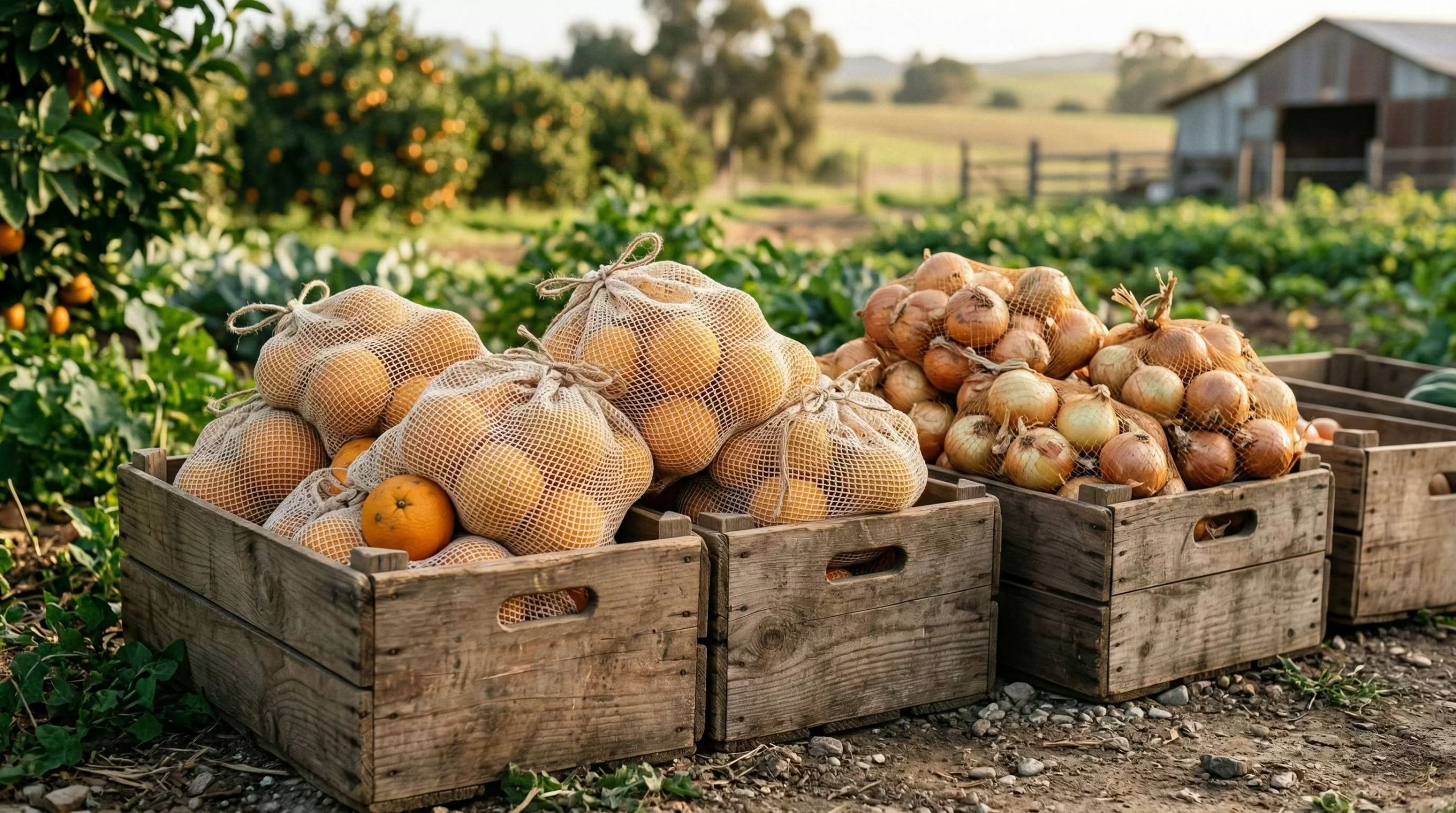
Durable mesh net bags are strong enough to withstand handling and can often be reused in certain supply chain stages.
Unlike fragile packaging that tears easily, high-quality mesh nets:
- Resist tearing
- Maintain structural integrity
- Handle heavy loads
- Offer reliable closure systems
Reusability contributes to reducing packaging turnover and promotes more responsible usage patterns in wholesale markets.
5. Efficient Transportation & Lower Carbon Impact
Transportation emissions form a significant part of agricultural supply chain carbon footprints.
Because mesh net bags are lightweight and flexible, they:
- Reduce overall shipment weight
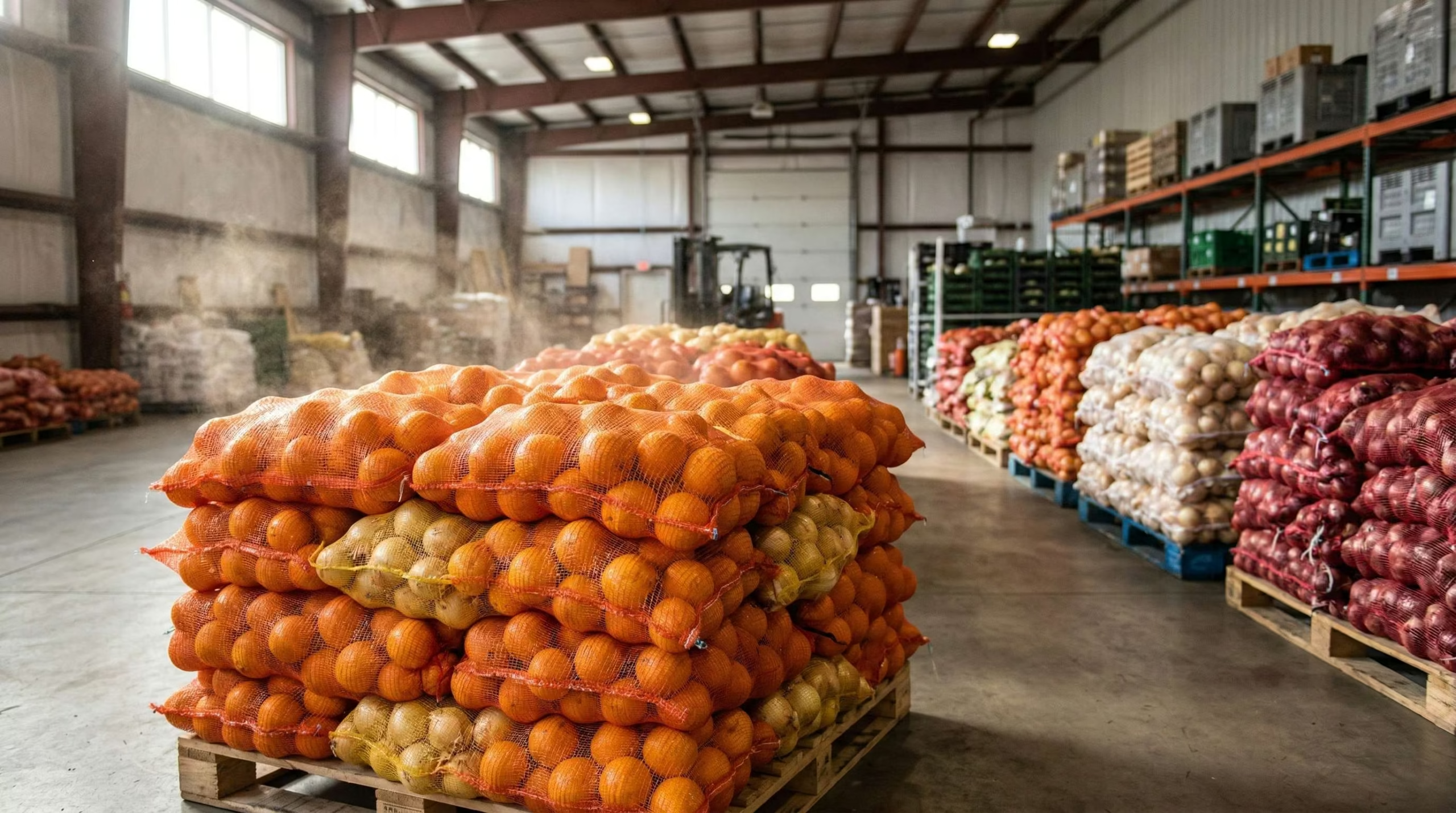
- Allow efficient stacking
- Improve container utilisation.
- Lower fuel consumption per shipment
Optimised logistics lead to lower carbon emissions over time.
When packaging reduces weight and improves space efficiency, transportation becomes more sustainable.
6. Natural & Eco-Friendly Positioning
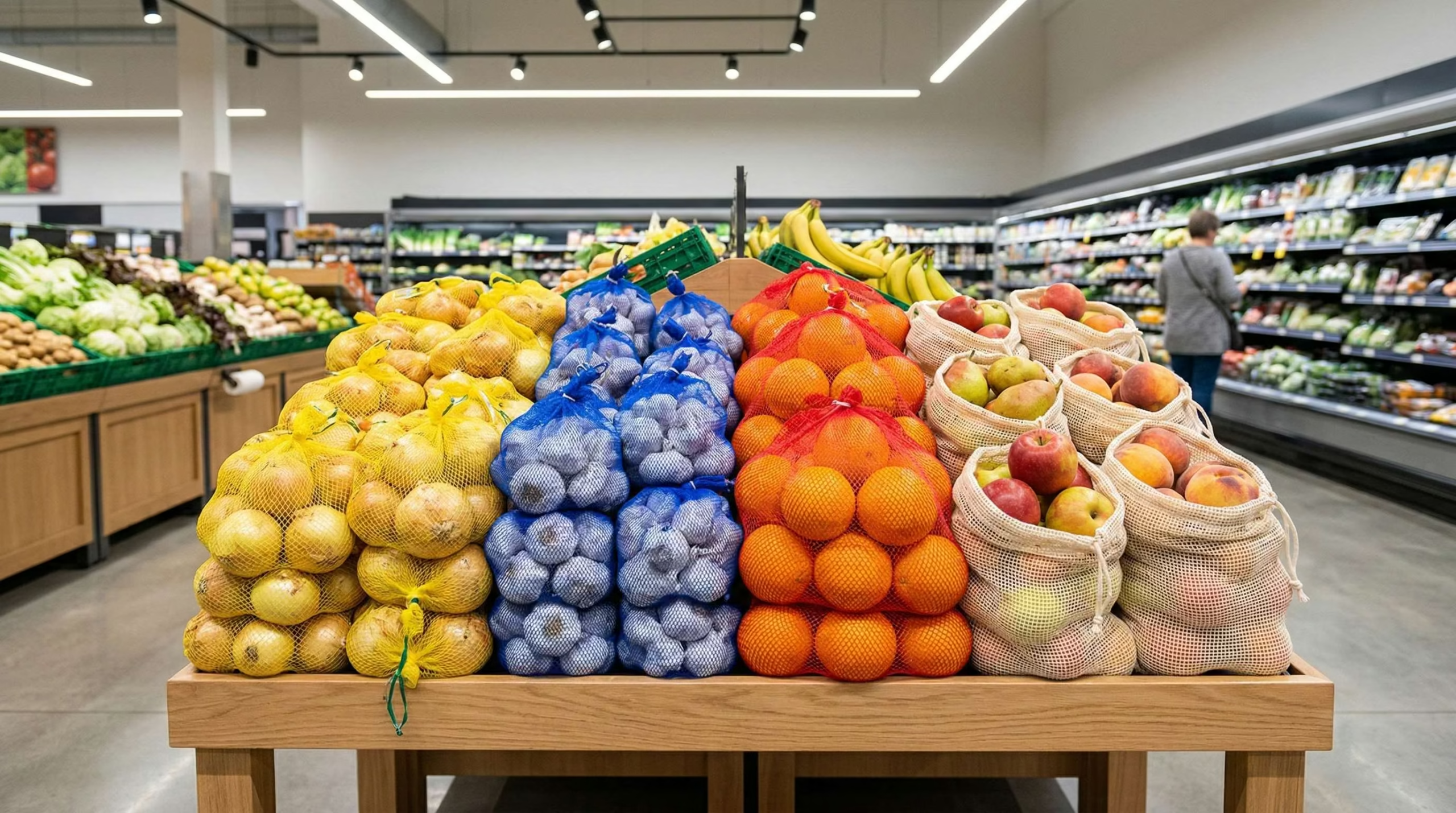
Natural-coloured mesh net bags are increasingly being used by businesses aiming to present an environmentally conscious brand image.
In retail environments, natural mesh packaging:
- Signals sustainability
- Appeals to eco-aware customers
- Enhances brand credibility
Consumers are more likely to support brands that visibly demonstrate responsible practices.
Packaging is often the first physical interaction customers have with a product. Eco-friendly mesh packaging reinforces a positive environmental message.
7. Customization Without Excess Printing
Traditional packaging often requires extensive printing, lamination, and additional materials for branding.
allowing the following:Mesh net packaging simplifies this process by allowing:
- Minimalist labeling
- Attached printed tags
- Clean, transparent product visibility
Since the product remains visible, businesses can reduce excessive design elements while maintaining retail appeal.
This streamlined approach reduces material waste associated with over-packaging.
8. Adaptability for Modern Retail & Export Markets
Sustainable packaging must also meet commercial demands.
Mesh net bags are widely used in:
- Supermarkets
- Wholesale markets
- Export shipments
- Combo packaging formats
Available in various sizes (1kg to 5kg) and bulk roll formats (1000-metre rolls with 350mm to 380mm width), mesh packaging supports both small-scale and industrial operations.
This adaptability makes it a practical solution for businesses aiming to combine sustainability with scalability.
9. Compliance with Evolving Market Standards
As regulations tighten globally regarding packaging waste and environmental responsibility, businesses must adapt proactively.
Breathable mesh packaging aligns with the following:
- Reduced material strategies
- Efficient resource utilization
- Waste minimization initiatives
- Responsible packaging practices
Adopting sustainable packaging early helps businesses stay ahead of regulatory changes and market expectations.
10. The Future of Agricultural Packaging
The future of agricultural packaging will focus on:
- Efficiency
- Minimalism
- Functionality
- Sustainability
- Cost-effectiveness
Mesh net bags represent a balance of all these factors.
They are:
- Durable
- Breathable
- Lightweight
- Cost-efficient
- Scalable
- Customizable
As sustainability continues to shape global industries, practical packaging solutions like mesh net bags will play a critical role in supporting environmentally responsible agricultural supply chains.
Conclusion
Sustainability is no longer a trend — it is a business necessity.
In the agricultural sector, packaging must evolve to meet both environmental and operational demands.
Eco-friendly mesh net bags provide a smart solution by:
- Reducing material usage
- Minimizing food waste
- Supporting reusability
- Improving transportation efficiency
- Enhancing eco-conscious branding
For fruit and vegetable suppliers, exporters, and retailers, adopting breathable and lightweight mesh packaging is not only a practical choice – it is a forward-thinking strategy.
As the industry moves toward greener operations, mesh net packaging will continue to lead the way in responsible agricultural packaging innovation.